Do I really need a retaining wall?
That's usually the first thing folks ask me, and it's a fair question. You probably need a retaining wall if you've got a significant slope on your property that's causing issues, or if you're planning to create a level area where there isn't one. We see a lot of this in Redmond, especially with some of the newer developments carved into hillsides or older properties where people want to maximize their usable yard space. If you're noticing soil erosion, water runoff problems that are affecting your foundation or landscaping, or if you just can't use a sloped part of your yard effectively, then yeah, a retaining wall is likely the solution. It's not just about aesthetics; it's about stability and making your land work for you.
What's the difference between concrete block and poured concrete walls?
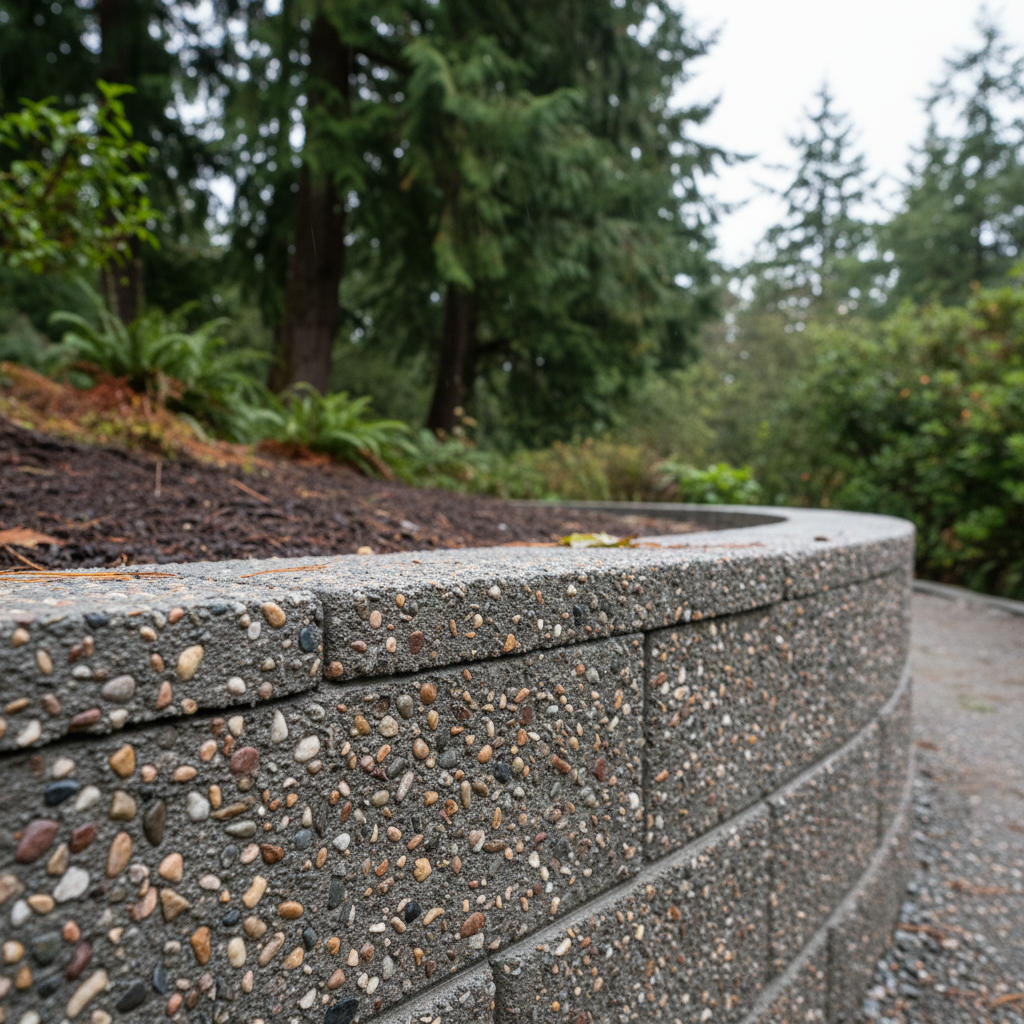
Good question, because they're both concrete but they're built very differently and have different strengths. Concrete block walls, often called segmental retaining walls (SRWs), use interlocking blocks that are dry-stacked without mortar. They rely on their weight and the friction between blocks, often with geogrid reinforcement, to hold back soil. They're flexible, so they can handle minor ground movement better, and they come in a huge variety of colors and textures, which makes them popular for landscaping. Poured concrete walls, on the other hand, are exactly what they sound like: concrete poured into forms on-site. These are typically reinforced with rebar, making them incredibly strong and rigid. They're often used for taller walls, heavier loads, or when you need a perfectly smooth, uniform surface that can be painted or stuccoed. For example, if you're building a wall along a busy road or supporting a driveway, poured concrete is usually the way to go for that sheer strength.
How long do concrete retaining walls last in our Redmond climate?
A well-built concrete retaining wall, whether block or poured, should last for decades here in Redmond. We're talking 50 to 100 years, easily. The key is proper design and installation. Our wet winters and freeze-thaw cycles can be tough on anything outdoors, so drainage is absolutely critical. If water gets trapped behind the wall and freezes, it expands, putting immense pressure on the structure. That's why we always include robust drainage systems — things like perforated pipes (French drains) and gravel backfill — to make sure water can escape. Using quality materials, proper compaction of the soil, and adequate reinforcement are also non-negotiable. If you skimp on any of those steps, even the best concrete won't hold up as long as it should. That's where Allied Concrete Solutions really focuses on getting it right the first time.
Do I need a permit for a retaining wall in Redmond?
Most likely, yes. In Redmond, any retaining wall over four feet in height, measured from the bottom of the footing to the top of the wall, typically requires a building permit. Even walls shorter than that might need a permit if they're supporting a significant load, are near a property line, or are part of a larger project like a new home construction. It's not just about the city wanting to make things difficult; it's about ensuring the wall is designed safely by a professional engineer and built to code. This protects you, your property, and your neighbors. Don't try to skip the permit process; it can lead to costly problems down the road, including having to tear down and rebuild the wall. Always check with the City of Redmond Planning Department before you start any significant project.
What kind of maintenance do concrete retaining walls need?
Honestly, one of the biggest advantages of concrete retaining walls is how low-maintenance they are. Once they're properly installed, they don't need much. Your main tasks will be:
- **Keeping the drainage clear:** Make sure the weep holes or drainage outlets aren't blocked by leaves, soil, or debris. This is crucial, especially after a big rain.
- **Checking for cracks or bulges:** Periodically walk along the wall and look for any new cracks, leaning, or bulging. Small hairline cracks are often normal, but anything significant means you should call a professional to assess it.
- **Controlling vegetation:** Don't let large tree roots grow too close to the wall, as they can exert pressure over time. Keep plants from growing directly into the wall's face, especially if it's a block wall where roots can get into the joints.
How much does a concrete retaining wall cost?
This is the million-dollar question, and the answer is always,