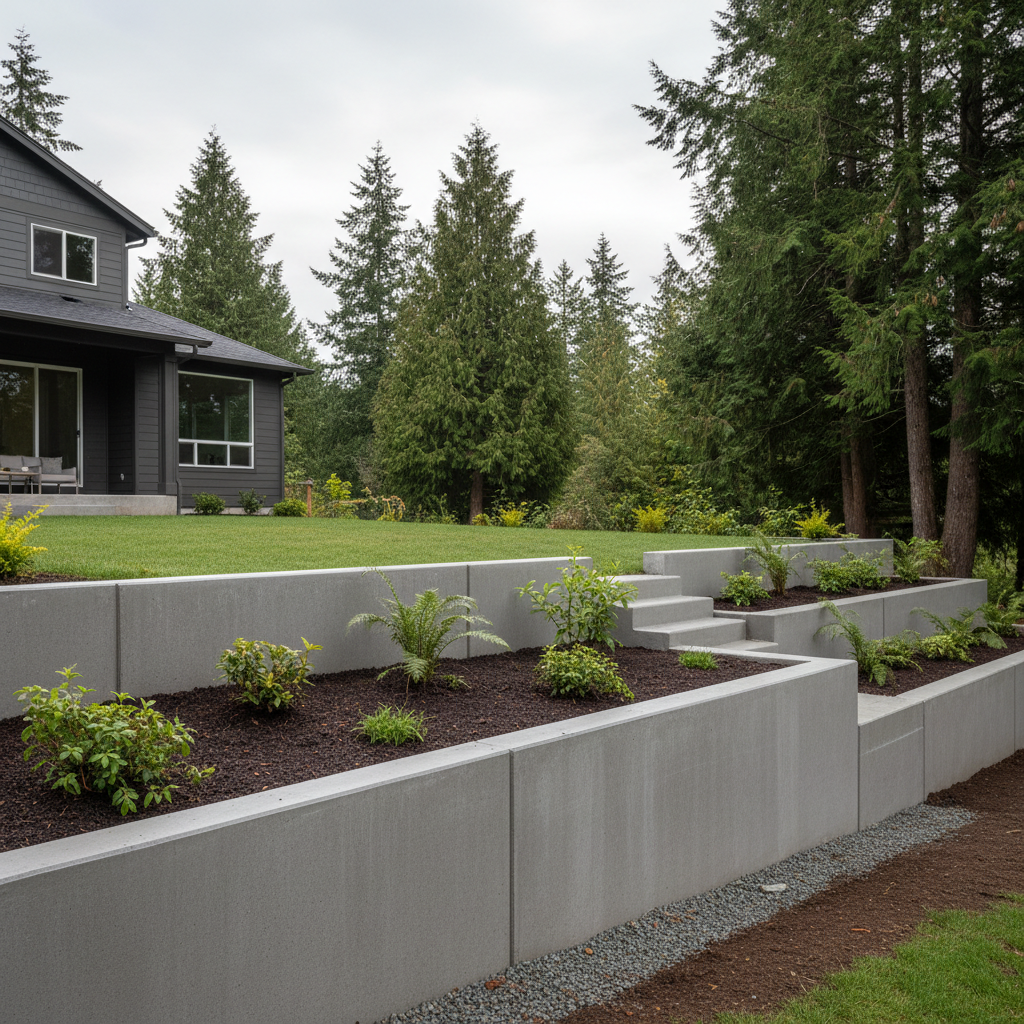
You've got a concrete retaining wall, and it's doing its job. Maybe it's holding back a slope in your backyard, creating a level patio space, or supporting a driveway. Whatever its purpose, that wall is a significant investment, especially here in Redmond where we get our fair share of rain and shifting soils. My goal is to help you keep that investment sound for decades.
Why PNW Weather is Tough on Retaining Walls
Our climate is beautiful, but it's also a constant challenge for anything built into the ground. We get a lot of rain, especially from October through May. That means saturated soils, hydrostatic pressure, and freeze-thaw cycles, even if they're not as extreme as in other parts of the country. All of these put stress on your wall. Good drainage is key, and if your wall wasn't built with proper drainage, you're already fighting an uphill battle.
Extending Your Wall's Lifespan: Proactive Steps
The best way to make your concrete retaining wall last is to prevent problems before they start. It's not rocket science, but it takes a little attention.
- Keep it Clean: Don't let debris build up at the base or on top of your wall. Leaves, dirt, and mulch can hold moisture against the concrete, promoting moss growth and, over time, even minor erosion or surface degradation. A quick sweep or rinse a few times a year goes a long way.
- Manage Water Flow: This is huge. Make sure downspouts aren't dumping water directly onto or near your wall. Redirect them with extensions if you need to. Check your yard's grading; water should always flow away from the wall, not towards it or pooling near the base. If you have a French drain behind the wall, make sure its outflow isn't blocked.
- Mind Your Landscaping: Planting large trees or shrubs too close to the wall can be an issue. Their roots can put pressure on the concrete over time, or even find their way into small cracks, expanding them. Stick to smaller plants or those with non-invasive root systems near the wall.
- Prevent Overloading: Your wall was designed to hold a certain amount of soil and pressure. Don't stack heavy materials like firewood, large rocks, or construction debris right against the top or behind it. If you're planning any major landscaping changes that involve adding significant weight, talk to a professional first.
Regular Maintenance: What You Should Be Doing
You don't need to inspect your wall with a magnifying glass every day, but a quick check-up a couple of times a year, especially after heavy rain or a freeze, is smart.
Walk the length of your wall. Look at the face, the top, and the ground around it. Are there any new cracks? Is the ground settling? Are the weep holes (those small openings designed to let water out) clear and flowing? Sometimes, a simple hose can clear out a clogged weep hole. If you see moss or algae, a gentle scrub brush and some diluted bleach or a specialized cleaner can take care of it, but make sure to rinse thoroughly so it doesn't sit on the concrete.
Here in Redmond, especially in areas with clay soils like parts of Education Hill, proper drainage is paramount. If your weep holes aren't doing their job, that water has nowhere to go but build up behind the wall, pushing against it.
Warning Signs of Trouble: Don't Ignore These
Some issues are minor, but others can signal a bigger problem. Here's what to watch for:
- New or Growing Cracks: Small hairline cracks are often just surface-level and part of concrete's natural curing and settling. But if you see cracks that are wider than a credit card, running horizontally, stair-stepping, or growing noticeably, that's a red flag.
- Bulging or Leaning: This is a serious one. If any part of your wall looks like it's pushing outwards, bowing, or leaning, it means there's significant pressure behind it, and the wall's structural integrity might be compromised.
- Water Seepage (not from weep holes): If water is consistently seeping through the face of the wall in places other than the weep holes, it indicates a drainage problem behind the wall.
- Erosion at the Base: If the soil around the base of your wall is washing away, it can undermine the foundation of the wall itself.
- Separation from Adjacent Structures: If your retaining wall is connected to a patio, driveway, or foundation, and you see gaps forming where they meet, it's a sign of movement.
When to Call a Professional
Look, I'm a contractor, and I'll tell you straight: some things are DIY, and some aren't. When it comes to the structural integrity of your retaining wall, don't guess. If you see any of the serious warning signs I just mentioned – significant cracks, bulging, leaning, or major erosion – it's time to call in an expert. Don't wait until it's a full-blown failure.
At Allied Concrete Solutions, we deal with these issues all the time. We can assess the situation, figure out what's causing the problem, and recommend the right solution, whether it's drainage repair, crack injection, or a more extensive structural fix. Catching these problems early can save you a lot of money and headache down the road. Your wall is there to protect your property; make sure you're protecting your wall.