Alright, let's talk about decorative concrete. You're probably thinking about sprucing up your patio, driveway, or maybe an indoor floor, and you want to know what it's going to hit your wallet. It's not a one-size-fits-all answer, but I can give you some solid numbers and explain what drives them up or down.
What Makes Decorative Concrete Cost What It Does?
A few big factors really sway the price tag on decorative concrete projects. You've got to consider these when you're planning your budget.
- The Type of Decorative Finish: This is huge, honestly. Stamped concrete, for example, is generally more involved than a simple colored and sealed surface. Acid staining can be quite different from integral color, too. Each method has its own material and labor intensity.
- Project Size and Complexity: Bigger areas mean more material and more labor, obviously. But complexity also plays a role. A perfectly rectangular patio is easier and faster to pour and finish than one with intricate curves, multiple levels, or steps.
- Existing Conditions: Are we tearing out old concrete? That's extra labor, disposal fees, and sometimes permits. Is the ground prepped and level? If not, we'll need to do excavation and grading, which adds to the cost. If you're building on the soft, clay-heavy soils common around parts of Redmond, we might need more extensive sub-base prep to ensure stability.
- Site Accessibility: Can a concrete truck easily get to the pour site? If we have to pump concrete over a long distance or through a tight backyard, that's an additional cost for pump truck rental and extra crew time.
- Detail Work and Customization: Fancy borders, multiple colors, intricate patterns, or custom scoring all add time and skill requirements, which means more cost.
- Sealing and Protection: A good sealer is crucial for decorative concrete, especially with our PNW rain. Higher quality, longer-lasting sealers cost more but offer better protection and longevity.
Typical Cost Ranges for Decorative Concrete in Redmond
I know you want numbers, so here they are. These are general ranges for installed costs per square foot in the Redmond area. Keep in mind, these are starting points, and the factors above can push them higher.
- Colored and Sealed Concrete: This is often your most budget-friendly decorative option. We add pigment to the concrete mix or apply a stain after it's cured, then seal it. You're usually looking at $8 - $12 per square foot.
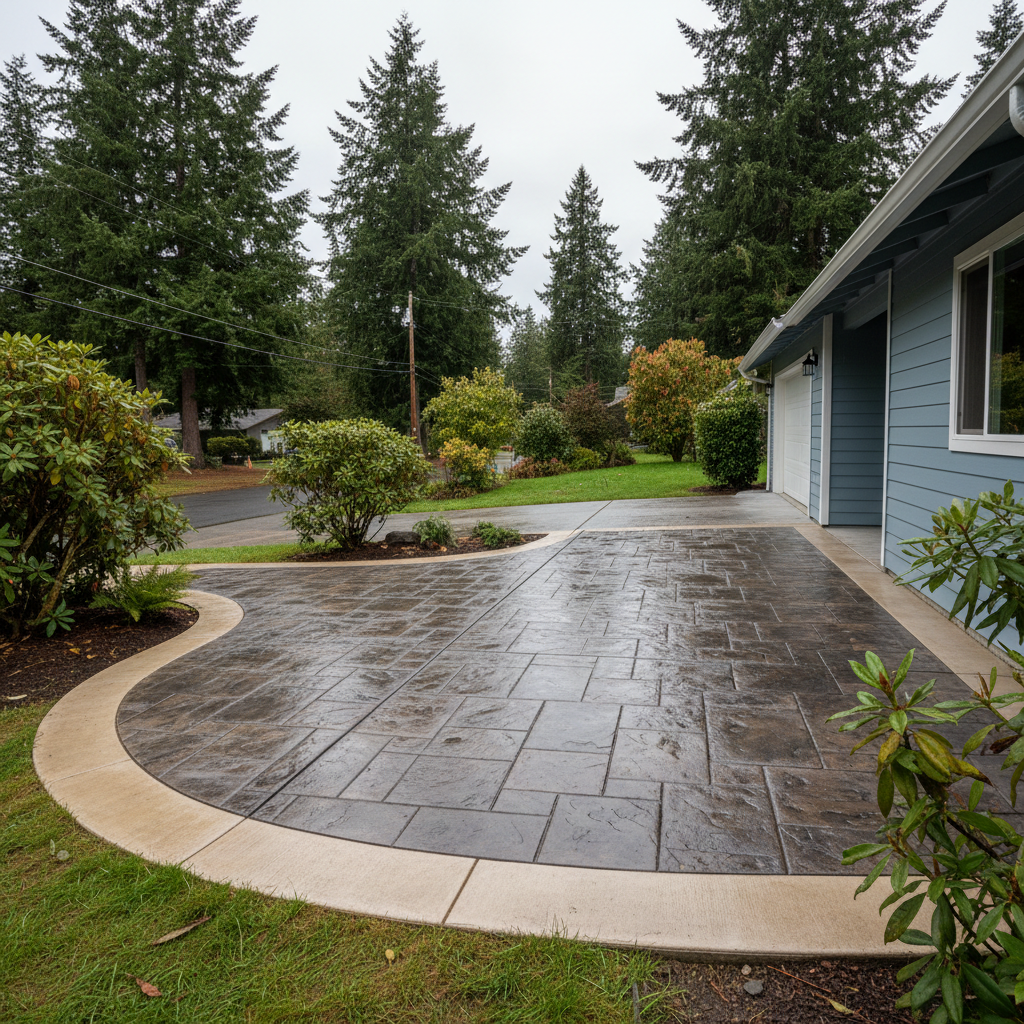
- Stamped Concrete: This is where we impress patterns into fresh concrete to mimic stone, brick, or wood. It's very popular for patios and walkways. Prices typically range from $12 - $20 per square foot, depending on the complexity of the pattern and number of colors.
- Acid-Stained Concrete: This creates a translucent, variegated look by reacting with minerals in the concrete. It's great for unique, earthy tones. Expect to pay around $10 - $18 per square foot.
- Exposed Aggregate: This finish washes away the top layer of cement to reveal the decorative stones within the concrete mix. It's durable and slip-resistant. Costs are usually in the $10 - $16 per square foot range.
- Polished Concrete (Indoor): For interior floors, polished concrete offers a sleek, modern look. This is a multi-step process involving grinding and polishing. It can range from $15 - $30+ per square foot, depending on the desired sheen and aggregate exposure.
For smaller projects (under 200 sq ft), you'll often see a higher per-square-foot price because the fixed costs (mobilization, setup, minimum material orders) are spread over a smaller area. A 100 sq ft patio might cost you $1,500 total, which is $15/sq ft, even for a basic stamped finish.
What Should a Quote Include?
When you get a quote from Allied Concrete Solutions, or any other reputable contractor, make sure it's detailed. You want to see:
- Scope of Work: A clear description of what's being done. Is it a new pour? An overlay? Or are we tearing out and replacing?
- Materials: What type of concrete, color, pattern, and sealer will be used?
- Preparation: Does it include excavation, grading, base material (like gravel), and formwork?
- Finishing Details: Specifics on the decorative technique, control joints, and any custom elements.
- Cleanup and Disposal: Who's responsible for removing debris?
- Timeline: An estimated start and completion date.
- Warranty: What kind of guarantee do they offer on their work?
- Payment Schedule: How and when payments are due.
How to Avoid Overpaying for Decorative Concrete
Nobody wants to get ripped off, especially when you're investing in your home. Here's how to be smart about it:
- Get Multiple Bids: Always get at least three quotes from different contractors. This helps you compare pricing, but also gives you a feel for their professionalism and communication.
- Check References and Reviews: Don't just take their word for it. Look at their past work, talk to previous clients, and check online reviews.
- Be Specific About What You Want: The more detailed you are with your vision, the more accurate the quotes will be. Changes mid-project almost always cost more, don't they?
- Understand the Value, Not Just the Price: The cheapest bid isn't always the best. A slightly higher price might mean better materials, a more experienced crew, or a stronger warranty.
- Ask About Hidden Costs: Confirm if permits, disposal fees, or unexpected site conditions are covered or if they'll be additional charges.
- Don't Pay for Everything Upfront: A reputable contractor will usually ask for a deposit (25-50%) to cover materials, but the bulk of the payment should be due upon satisfactory completion.
Decorative concrete is a fantastic way to add curb appeal and value to your Redmond property. Just do your homework, ask the right questions, and you'll end up with a beautiful, long-lasting finish you'll love.