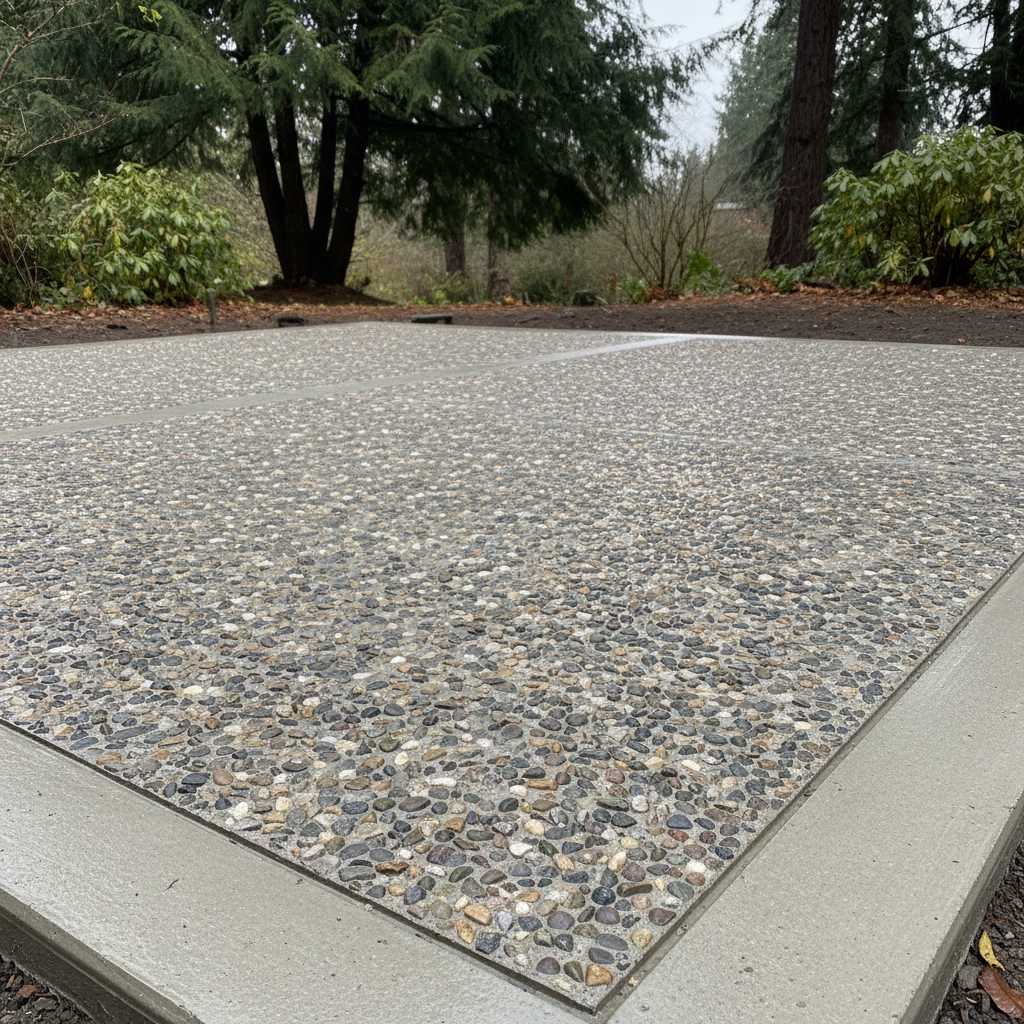
So, you're thinking about a new concrete project around your Redmond home, huh? Maybe it's just a small pad for the trash cans, or perhaps that bigger patio you've been dreaming about. It's a common thought for homeowners, really. Concrete looks simple enough – mix, pour, smooth, right? Well, it can be, for the *right* project. But there's a lot more to it than just that, and knowing when to grab a shovel versus when to pick up the phone can save you a ton of headaches, and money, down the line.
Before You Even Think About Mixing
First things first: what are you actually building? A small, non-structural slab, like a 2x2 pad for a BBQ, is a world away from a driveway extension or a new foundation. For those tiny, low-stakes projects, you might be able to DIY it. But anything that's going to bear significant weight, be driven on, or needs to last for decades without cracking? That's usually where you want to pause and consider a professional.
Permits. Don't forget 'em. For most concrete work beyond a small, decorative patch, you'll likely need a permit from the City of Redmond. Skipping this can lead to fines, or worse, having to tear out your work later. It's a pain, I know, but it's part of the deal. Check with the city's planning department before you start digging.
Then there's the site prep. This is arguably the most critical part of any concrete job. You need a stable, well-drained base. Around here, with our clay soils and constant rain, proper compaction and drainage are non-negotiable. If you don't get the base right, your concrete will crack, heave, and fail, no matter how good the pour itself is. Digging out the area, making sure it slopes away from your house for drainage, laying down and compacting a gravel base – this takes time, effort, and the right equipment. For anything larger than a small path, renting a plate compactor is a must. Don't try to compact gravel with your feet; it just won't work, believe me.
During the Pour: DIY or Pro?
Let's say you've prepped your small pad perfectly. You've got your forms built, rebar or wire mesh laid out, and you're ready to pour. For a small project, buying bags of pre-mixed concrete from the hardware store and mixing them in a wheelbarrow or a small rented mixer is doable. Just remember, concrete sets fast, especially on a warm, dry Redmond day. You need to work quickly and have a plan for screeding (leveling) and finishing the surface. Get some knee boards, a bull float, and a hand trowel. Watch some videos, practice on a scrap piece if you can. The goal is a smooth, even surface with the right texture for grip.
Now, if you're talking about a larger project – a driveway, a big patio, or anything that requires more than a dozen bags of concrete – you're looking at a concrete truck delivery. This is where most DIYers hit their limit. A concrete truck delivers a massive amount of material, and it doesn't wait around. You need a crew, and you need to know exactly what you're doing. Getting the mix right, handling the sheer volume, screeding a large area, and then finishing it all before it sets up... it's a race against time and gravity. This is where calling in a professional like Allied Concrete Solutions makes all the sense in the world. We've got the crew, the tools, and the experience to handle those big pours efficiently and correctly, ensuring a durable, beautiful finish.
After the Concrete is Poured
So, the concrete's down. You're not done yet. Curing is just as important as the pour itself. Concrete doesn't just dry; it cures through a chemical reaction with water. You want that reaction to happen slowly and completely. For at least 7 days, and ideally 28, you need to keep that concrete moist. This means covering it with plastic sheeting, using wet burlap, or applying a liquid curing compound. If it dries out too fast, it'll be weaker and more prone to cracking. Especially with our summer sun or even just a windy spring day, concrete can dry out quickly here.
Protect it from heavy loads too. Don't drive on a new driveway for at least a week, and ideally longer. Let it gain its strength. Clean it regularly, especially if you get oil or other stains on it. A good seal coat every few years can also extend its life and keep it looking good.
Look, concrete is an amazing, durable material when done right. For small, non-critical projects, a determined DIYer can definitely tackle it. But for anything that needs to last, look great, and stand up to the Pacific Northwest elements and daily use, you're usually better off trusting it to someone who pours concrete every single day. We've seen too many DIY projects go sideways because folks underestimated the complexity. Save yourself the headache and get it done right the first time.