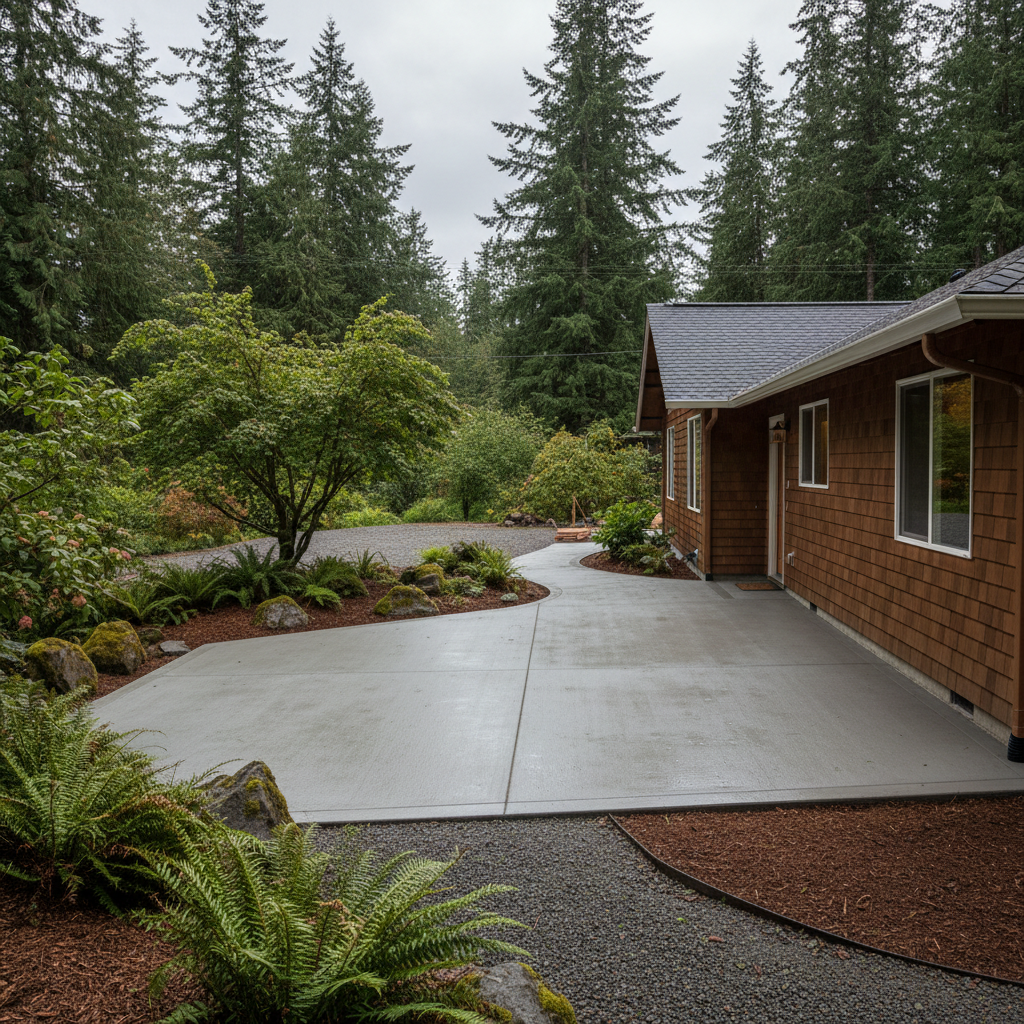
When's the best time to pour concrete around here? It's a question I get asked all the time, and it's a good one, especially with our unique Redmond weather. You'd think concrete's just concrete, right? But the truth is, the conditions when it's poured and how it's treated afterward make a huge difference in how long it lasts and how good it looks.
Timing Your Concrete Project in Redmond
Let's talk about scheduling. Here in Redmond, we've got a pretty distinct weather pattern. We get a lot of rain, especially from fall through spring, and then a few months of drier, warmer weather. That's why the sweet spot for pouring new concrete flatwork — think driveways, patios, walkways — is usually late spring, summer, and early fall.
Why those months? It's all about temperature and moisture. Concrete needs time to cure properly, and that process is highly sensitive to both. If it's too hot, it can dry out too quickly, leading to cracks. If it's too cold, or if it freezes, the water in the mix can expand, causing damage. And if it's constantly raining, it can mess with the water-cement ratio, weakening the final product. So, aiming for those drier, milder months, generally from May through October, gives your concrete the best chance to cure strong and durable.
Now, sometimes you can't wait. Maybe you've got an emergency repair or a tight construction schedule. We can pour concrete in colder or wetter conditions, but it requires extra precautions. We'd use special admixtures, insulating blankets, and sometimes even temporary shelters to protect the fresh concrete. It adds to the complexity and cost, but it's doable. My advice? Plan ahead if you can. It'll save you headaches and usually some money too.
Weather's Impact on Your Concrete
You know how our weather can be. One day it's sunny, the next it's a downpour. This variability is a big deal for concrete. When we're pouring, we're constantly watching the forecast. A sudden rain shower can dilute the surface of fresh concrete, weakening it and making it more susceptible to scaling or spalling later on. That's why we're always prepared with tarps and covers to protect the work if the skies decide to open up unexpectedly.
Temperature swings are another factor. Our overnight lows, even in summer, can sometimes dip. Concrete generates its own heat as it cures, but if the ambient temperature drops too much, especially below freezing, it can halt the hydration process. This is particularly important during the first few days after a pour. We'll often recommend covering new concrete with blankets or straw if cold nights are expected, helping it retain that internal heat and cure correctly.
And let's not forget about our local soil conditions. Many areas around Redmond, especially closer to the Sammamish River, have clay-rich soils. These soils can expand and contract significantly with changes in moisture, which can put stress on concrete slabs if they're not properly prepared with a good sub-base. It's not just about the concrete mix; it's about what's underneath it too.
Protecting Your Concrete Investment Year-Round
Once your concrete's in and cured, your job isn't over. You've made an investment, and you want it to last. Here's how you protect it, no matter the season:
- Seal It: This is probably the most important thing you can do. A good quality sealer, applied every few years, acts like a shield. It repels water, oil, and other stains. More importantly for us, it prevents water from penetrating the concrete, freezing, and then expanding, which is a major cause of surface damage in our climate.
- Clean It Regularly: Don't let moss, mildew, or dirt build up. A simple pressure wash once a year can make a huge difference. Just be careful with the pressure; too high and you can damage the surface.
- Address Cracks Early: Small cracks can become big problems. If you see minor cracks, especially in high-traffic areas, get them sealed. It prevents water from getting in and causing further damage. We can help with crack repair and sealing at Allied Concrete Solutions.
- Avoid De-icing Salts: This is a big one. Many de-icing salts contain chemicals that are incredibly harsh on concrete, especially newer concrete. They can cause spalling and deterioration. If you need to de-ice, look for products that are concrete-safe, often labeled as containing calcium magnesium acetate (CMA). Sand is always a safe bet for traction.
- Manage Drainage: Make sure water isn't pooling on or around your concrete. Proper drainage away from your flatwork prevents saturation and reduces the risk of freeze-thaw damage.
Taking these steps will help ensure your concrete flatwork stands up to our Redmond weather for years to come. It's all about understanding the material and giving it a little care. If you've got questions about your specific concrete project or need some work done, you know who to call.