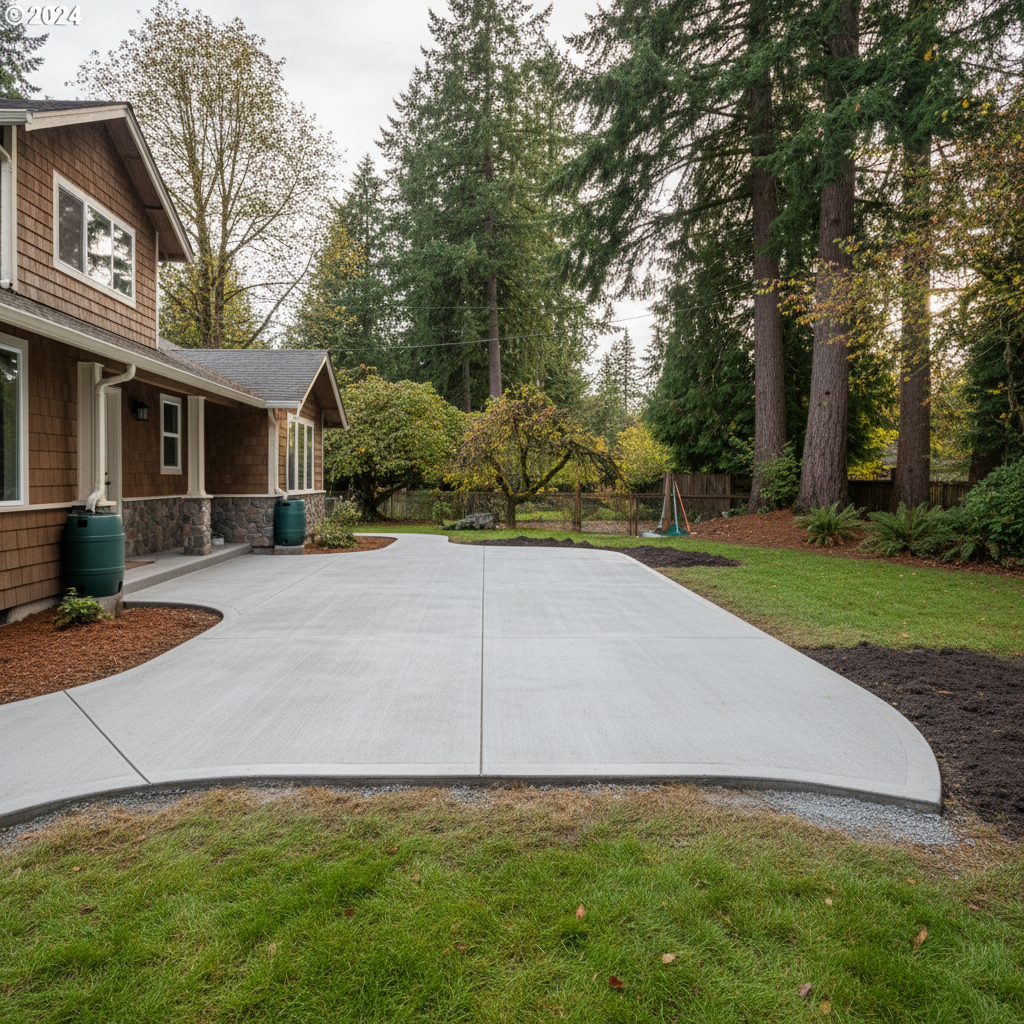
You need some new concrete flatwork, maybe a patio, a walkway, or a new driveway. Great! But then you start wondering, what's this really going to cost me? It's not as simple as a flat rate per square foot, and anyone who tells you it is probably isn't giving you the full picture. I've been doing this for years in Redmond, and I've seen it all. Let's talk about the real numbers.
What Drives Concrete Flatwork Pricing?
A lot of things go into the final price tag for concrete flatwork. It's not just the concrete itself, though that's a big part of it. Here's what we, as contractors, are looking at when we put together a bid:
- Project Size and Complexity: This is probably the biggest factor. A simple, rectangular 10x10 patio is way less work than a winding pathway with curves, steps, and multiple elevation changes. The bigger the area, generally the lower the per-square-foot cost can be, but the total price goes up. Complex shapes mean more formwork, more cutting, and more labor.
- Site Access: Can we get our equipment, trucks, and materials right up to where we're working? If we have to wheelbarrow concrete 100 feet from the street, or crane it over a fence, that's going to add to the labor cost. Homes with tight access, especially in some of the older, more densely packed neighborhoods around Marymoor Park, can be a challenge.
- Existing Conditions & Demo: Is there old concrete, asphalt, or a deck that needs to be torn out and hauled away? That's a separate cost. We also need to prepare the subgrade properly. If the soil is soft, muddy, or needs a lot of fill and compaction, that takes time and materials. Redmond's clay-heavy soil can be tricky, especially after a long wet winter.
- Concrete Type & Finish: Standard gray concrete is the baseline. Want stamped concrete? Exposed aggregate? Colored concrete? Those all add to the material and labor costs. Stamping, for instance, requires specialized tools, more skilled labor, and more time.
- Reinforcement: Most flatwork needs rebar or wire mesh to prevent cracking and improve durability. The amount and type of reinforcement can vary based on the project and expected load (e.g., a driveway needs more than a sidewalk).
- Permits: Depending on the size and type of project, you might need a permit from the City of Redmond. We can help you figure that out, but the cost of the permit itself is usually passed on.
- Drainage: Proper drainage is crucial, especially with all the rain we get here. If we need to install drains, swales, or make significant grade changes, that's an additional cost.
Typical Cost Ranges in Redmond, WA
Okay, you want numbers. I get it. Keep in mind these are ranges, and your specific project could be higher or lower depending on all those factors I just mentioned. These numbers are for standard gray concrete, 4-inch thick, with wire mesh reinforcement, and a broom or smooth finish.
- Basic Walkways & Patios (simple shapes, good access): You're generally looking at $12 to $18 per square foot. So, a 100 sq ft patio might be $1,200 to $1,800.
- Driveways (standard thickness, good access): These tend to be a bit more because of the thickness and load requirements. Expect $14 to $20 per square foot. A 500 sq ft driveway could be $7,000 to $10,000.
- Decorative Concrete (stamped, colored, exposed aggregate): This is where costs jump up. For stamped or colored concrete, you're usually in the $18 to $35+ per square foot range, depending on the pattern complexity and color choices. An exposed aggregate finish might be $16 to $28 per square foot.
Remember, these ranges include labor, materials, and basic site prep. Anything beyond standard, like significant demo, extensive grading, or difficult access, will add to these numbers.
What Should Be Included in a Concrete Quote?
When Allied Concrete Solutions gives you a quote, or any reputable contractor for that matter, it should be detailed. Don't accept a one-line email with just a total price. Here's what a good quote should cover:
- Detailed Scope of Work: Exactly what's being done. Dimensions, thickness, type of finish.
- Materials: Type of concrete, reinforcement (rebar/mesh), any color or stamping specifics.
- Site Preparation: What demo is included (if any), excavation, subgrade compaction.
- Drainage: Any specific drainage solutions being installed.
- Permits: Who is responsible for pulling them and if the cost is included.
- Cleanup & Haul Away: What will be removed from your property when the job is done.
- Warranty: What kind of guarantee they offer on their work.
- Payment Schedule: Typically a deposit, progress payments, and a final payment.
- Total Cost: The final price, clearly stated.
How to Avoid Overpaying for Concrete Flatwork
Nobody wants to get ripped off. Here's my advice:
- Get Multiple Bids: This is a no-brainer. Get at least three detailed quotes from reputable, licensed, and insured contractors. Don't just compare the bottom line; compare what's included in each bid.
- Check References & Reviews: Look at their past work. Talk to previous clients. Check online reviews. A good reputation is earned.
- Ask Questions: If something in the quote isn't clear, ask! A good contractor will take the time to explain everything.
- Don't Always Go with the Lowest Bid: The cheapest option often cuts corners. They might use less reinforcement, thinner concrete, or inexperienced labor. You'll pay for it in the long run with cracks and premature failure. Quality concrete work is an investment.
- Understand the Contract: Read everything before you sign. Make sure all the details from the quote are in the contract.
- Be Wary of Cash-Only Deals: This is a huge red flag. It often means they're not licensed, insured, or paying taxes, which leaves you exposed to liability if something goes wrong.
Doing your homework upfront will save you a lot of headaches and money down the road. Quality concrete flatwork should last for decades, so invest wisely.