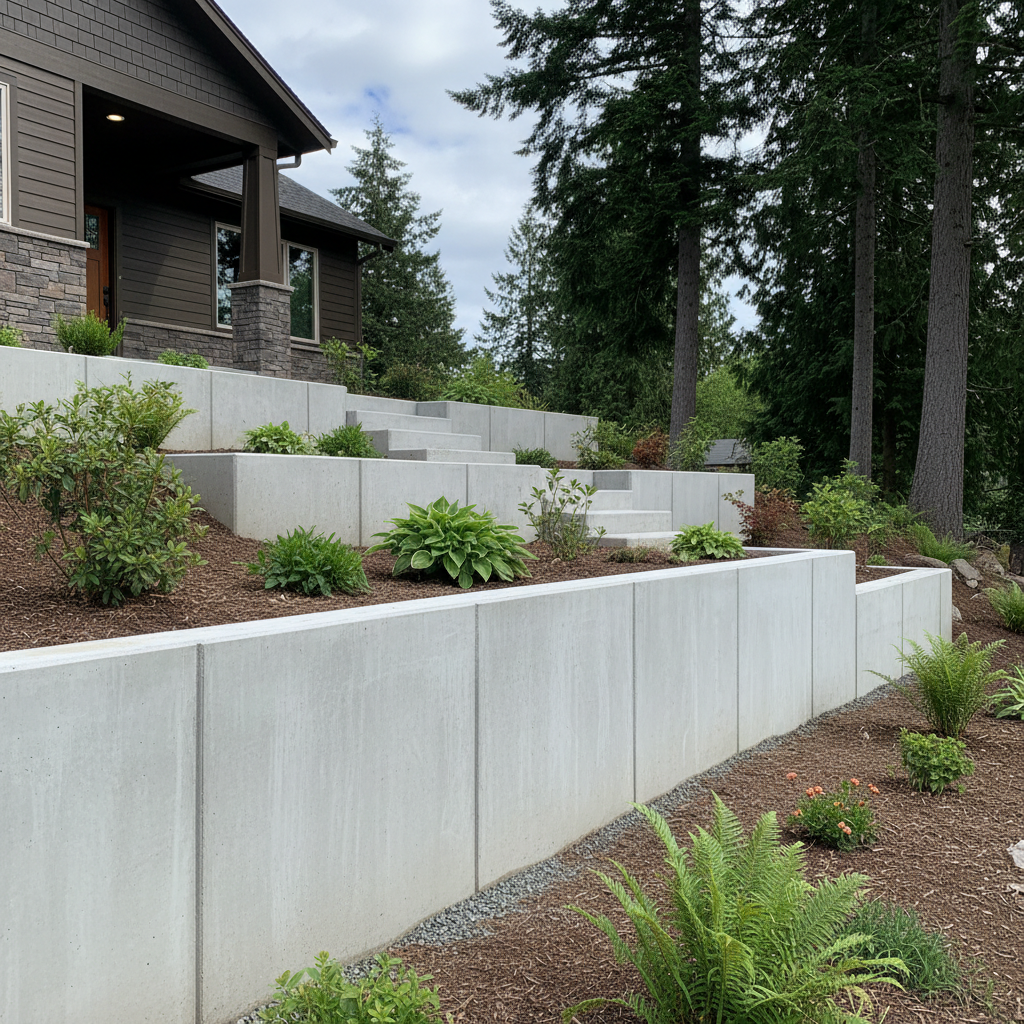
Your concrete retaining wall isn't just there for looks; it's holding back a lot of earth, especially if you're on one of those sloped lots common around Education Hill or Bear Creek. That's a big job, and like anything that works hard, it needs a little attention to keep doing its job for decades. I've seen plenty of walls around Redmond, and the ones that last are the ones that get looked after.
Regular Maintenance: Your Wall's Best Friend
Keeping your wall in good shape isn't rocket science, but it does require a bit of consistency. Think of it as preventative care for your property.
- Keep it Clean: Dirt, moss, and algae can build up on your wall. This isn't just an aesthetic issue; moss can hold moisture against the concrete, and over time, that's not good for its integrity. Give it a good scrub with a stiff brush and some mild soap and water once or twice a year. A pressure washer on a low setting can work too, but be careful not to blast away at any mortar joints or compromise the surface.
- Check Drainage: This is huge, especially here in Western Washington. Our rainy season means a lot of water is moving around. Your wall should have weep holes or a drainage system behind it to relieve hydrostatic pressure. Make sure these are clear of debris – leaves, soil, whatever. If water can't get out, it builds up behind the wall, and that's a recipe for disaster. I've seen walls push out because of blocked drainage.
- Inspect the Soil Around It: Look at the ground directly above and below your wall. Is it eroding? Are there new cracks forming in the soil? Significant erosion can undermine the wall's foundation or add extra stress. You might need to add some landscaping or adjust grading to direct water away.
- Trim Vegetation: While plants can look nice, large roots from trees or shrubs planted too close to the wall can exert incredible pressure over time. Keep vegetation a reasonable distance away, especially anything with a deep, aggressive root system.
Warning Signs You Shouldn't Ignore
Your wall will usually give you clues when something's not right. Catching these early can save you a lot of headache and money down the road.
- Cracks: Not all cracks are bad. Hairline cracks are pretty common in concrete due to curing and temperature changes. But if you see cracks that are wider than a credit card, or if they're getting longer, wider, or showing a distinct pattern (like a stair-step crack in a block wall), that's a red flag. Vertical cracks are often less concerning than horizontal ones, but any crack that's actively growing needs attention.
- Bulging or Leaning: This is probably the most obvious and serious sign. If any part of your wall looks like it's pushing outwards, or if the entire wall is leaning, you've got a significant issue. This usually points to major hydrostatic pressure or foundation problems.
- Water Seepage: Beyond the weep holes, if you see water consistently seeping through the face of the wall, especially in places it shouldn't, it indicates that water is building up behind it and finding weak spots. This can lead to efflorescence (white mineral deposits) or even spalling (flaking of the concrete surface).
- Displaced Blocks or Panels: If you have a segmental block wall and you notice blocks shifting, rotating, or popping out, that's a clear sign of movement and instability.
- Efflorescence: Those white, powdery stains? That's efflorescence – mineral salts left behind as water evaporates from the concrete surface. It's not usually structurally damaging on its own, but it's a strong indicator that water is consistently moving through your wall where it shouldn't be. It tells you your drainage might not be doing its job.
When to Call a Professional
Look, I'm a big believer in DIY when it's appropriate, but some things are best left to the pros. If you see any of those serious warning signs – significant cracks, bulging, leaning, or major block displacement – don't wait. These aren't minor fixes you can patch up with some caulk. They indicate a deeper structural problem that needs an expert assessment.
Ignoring these issues won't make them go away; they'll only get worse, more expensive to fix, and potentially dangerous. A failing retaining wall can cause significant property damage, or even injury. When you call Allied Concrete Solutions, we'll come out, assess the situation, figure out what's really going on, and give you an honest opinion on the best course of action. Sometimes it's a repair, sometimes it's a rebuild. Either way, getting an expert eye on it early is always the smartest move.
Your retaining wall is an investment in your property. A little regular care and knowing what to look for can ensure it stands strong for years to come, protecting your home and landscape.