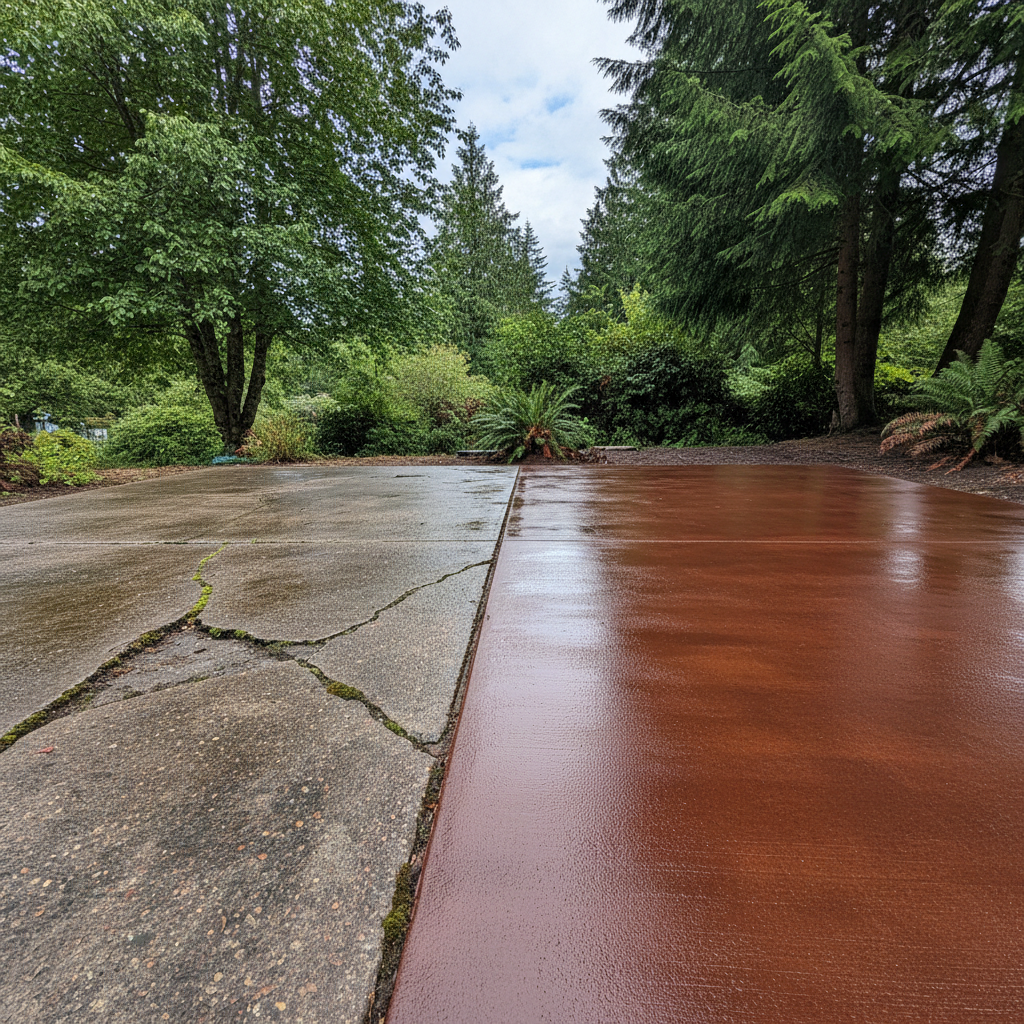
You're thinking about sprucing up that old concrete patio, garage floor, or even an interior slab, and staining is on your mind. Good call. It's a fantastic way to add character and color without completely tearing things out. But when you start looking into it, you'll quickly find there are two main types of concrete stains out there: acid-based and water-based. So, which one's right for your place here in Redmond?
I've been working with concrete for years, and I've seen both of these applied in all sorts of situations. They're pretty different, and understanding those differences is key to getting a result you'll love and that'll last, especially with our Pacific Northwest weather.
Acid-Based Concrete Stains: The Reactive Option
Let's start with acid stains. These aren't like paint; they don't just sit on top of the concrete. Instead, they contain metallic salts and hydrochloric acid that react chemically with the free lime and minerals in the concrete. This reaction actually changes the color of the concrete itself, creating a translucent, mottled, and unique finish. Think of it like a natural stone look, with variations and depth.
Pros:
- Unique Appearance: You get a really rich, variegated, almost marble-like finish. No two acid-stained floors will ever look exactly alike, which is a big draw for folks wanting something distinctive.
- Durability: Because the color is actually part of the concrete, it won't chip, peel, or fade like a topical coating might. It's incredibly durable once sealed properly.
- UV Stability: The color holds up really well to sunlight, making it a great choice for outdoor patios and walkways that get a lot of sun exposure.
- Low Maintenance (after sealing): Once sealed, it's pretty easy to clean. Just sweep and mop.
Cons:
- Limited Color Palette: This is a big one. Acid stains typically come in earthy tones – browns, tans, greens, and some blues. You won't get vibrant reds, yellows, or opaque grays. The final color is also somewhat unpredictable because it depends on the concrete's specific chemical composition.
- Surface Prep is Critical: Any old stains, glues, or sealers on the concrete can prevent the acid from reacting, leading to blotchy results. Getting the surface perfectly clean and porous is non-negotiable.
- Application Complexity: It's a chemical process, so application can be a bit trickier than water-based stains. You need to neutralize the acid after it reacts, and then rinse thoroughly.
- Cost: Generally, acid staining can be a bit more expensive than water-based, mainly due to the more involved prep and application process, plus the need for a good quality sealer.
Water-Based Concrete Stains: The Pigmented Choice
Now, water-based stains are a different beast. These are essentially finely ground pigments suspended in a water or acrylic carrier. They penetrate the concrete's pores to deposit color, but they don't react chemically with the concrete like acid stains do. They provide a more uniform, opaque color, similar to a very thin paint or wash.
Pros:
- Wider Color Range: This is where water-based shines. You can get almost any color imaginable, from vibrant reds and blues to crisp grays and blacks. If you have a specific color scheme in mind for your home in Redmond Ridge, this gives you more flexibility.
- More Predictable Results: What you see on the color swatch is generally what you'll get on your concrete, assuming proper application.
- Easier Application: They're generally easier to apply for DIYers, with less fuss about chemical reactions and neutralization.
- Better for Problematic Slabs: If your concrete slab is older, has been patched, or has inconsistent areas, water-based stains can sometimes hide these imperfections better than acid stains, which tend to highlight them.
Cons:
- Less Translucent Look: While they offer color, they don't give you that same deep, mottled, translucent effect that acid stains do. The look is more uniform and opaque.
- Potential for Fading: Some water-based stains, especially cheaper ones, can be more prone to fading over time, particularly in direct sunlight. You need a good quality product and a UV-resistant sealer.
- Durability (can vary): While good quality water-based stains are durable, they might not always offer the same ingrained, chemical bond durability as acid stains.
- Sealing is Crucial: Just like acid stains, a high-quality sealer is absolutely essential to protect the color and the concrete itself.
So, What's My Recommendation for Redmond Homeowners?
Alright, here's the deal. For homeowners here in Redmond, with our often damp conditions and occasional bright sun, I lean towards acid-based stains for outdoor applications like patios, walkways, and pool decks. Why? That inherent durability and UV stability is a huge plus when you've got a mix of cloudy days and strong summer sun. Plus, the way the color becomes part of the concrete means it's less likely to show wear and tear from foot traffic or our typical moss and algae growth (which, let's be honest, we're always battling here).
For interior spaces, like a garage floor or a basement recreation room, it really depends on the look you're going for. If you want that rich, earthy, natural stone vibe, and your concrete is in good shape, acid stain is fantastic. But if you're looking for a specific, vibrant color to match your decor, or if your concrete has some minor blemishes you want to mask, a high-quality water-based stain is probably your best bet.
No matter which you choose, surface preparation is king. You can't skip corners there. And a good quality sealer is non-negotiable. It protects your investment, enhances the color, and makes cleaning a breeze. Here at Allied Concrete Solutions, we always emphasize proper prep and the right sealer for the job. It's the difference between a stain that looks good for a year and one that looks great for a decade.
Think about your existing concrete too. Is it brand new or decades old? Has it been sealed before? These factors play a huge role in how either stain will perform. Give us a call if you're unsure; we're happy to take a look at your specific situation and give you an honest assessment.